Silver vark on sweets: Is it really non-vegetarian?
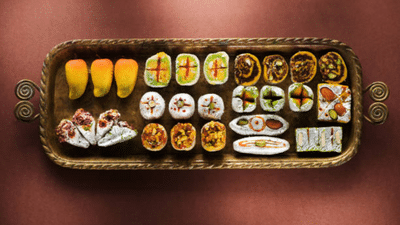
If you love festive sweets like Kaju Katli then you’ve probably noticed that thin-shiny silver layer on top, that’s called Silver Vark (or varak/varakh). But lately, a question has been swirling: “Is that silver leaf making my otherwise-vegetarian sweet non-vegetarian?” Let’s dig in.
How is the chandi ka vark made?
Traditionally, silver vark was made by pounding pure silver into ultra-thin sheets. The catch? The sheets were often flattened between animal tissues (like cow- or ox-gut) because the texture helped separate the silver easier. That raised ethical/ dietary questions among vegetarians. Because of this, sweets adorned with silver leaf became tricky for strictly vegetarian households, the concern wasn’t about meat on the sweet, but about contact with animal-derived materials during processing.
In 2016, India’s food regulator Food Safety and Standards Authority of India ( ) issued rules banning animal materials in silver-leaf manufacturing. “In 2016, FSSAI banned the use of materials of animal origin in the manufacturing of chandi ka warq (silver leaf), which is used to decorate sweets and pan. In Regulation 2.11.4 of the Food Safety and Standards (Food Product Standards and Food Additives), Regulations, 2011, pertaining to chandi ka warq, the regulator had prescribed the silver content and the form in which the leaf should be manufactured. The regulation stated that, “It should be in the form of a sheet of uniform thickness, free from creases and folds. The weight of the silver leaf should be up to 2.8g/sq m, and silver content should be of minimum 999/1,000 fineness,” FSSAI had said.
Since then:
So the version of Kaju Katli you buy today from a reputable sweet-shop or packaged brand is very likely vegetarian-safe, even with that silver layer on top.
What to check before you bite
To be extra sure:
That shimmering silver on your Kaju Katli might look extravagant, but it doesn’t automatically make the sweet non-vegetarian. Thanks to regulatory changes and modern production, many silver vark sheets are now made without any animal-derived materials. That means you can enjoy that festive box of sweets without the dietary guilt.
How is the chandi ka vark made?
Traditionally, silver vark was made by pounding pure silver into ultra-thin sheets. The catch? The sheets were often flattened between animal tissues (like cow- or ox-gut) because the texture helped separate the silver easier. That raised ethical/ dietary questions among vegetarians. Because of this, sweets adorned with silver leaf became tricky for strictly vegetarian households, the concern wasn’t about meat on the sweet, but about contact with animal-derived materials during processing.
Since then:
- More manufacturers switched to machine-based or plant/ synthetic materials instead of animal tissues.
- Silver vark is required to meet strict purity, thickness and hygiene standards.
- Many brands now label or certify their silver foil as vegetarian-friendly.
So the version of Kaju Katli you buy today from a reputable sweet-shop or packaged brand is very likely vegetarian-safe, even with that silver layer on top.
What to check before you bite
To be extra sure:
- Ask if the silver vark used is certified vegetarian / animal-material-free.
- If buying packaged sweets, look for labels stating the manufacture method or “vegetarian” indication.
- If you’re still unsure, go for the plain version of Kaju Katli without the silver layer, the taste remains the same!
Read more