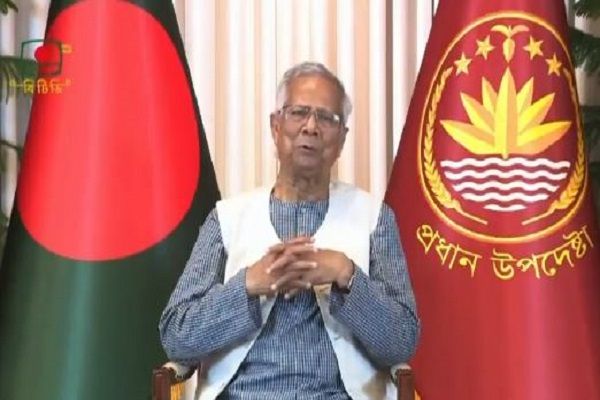
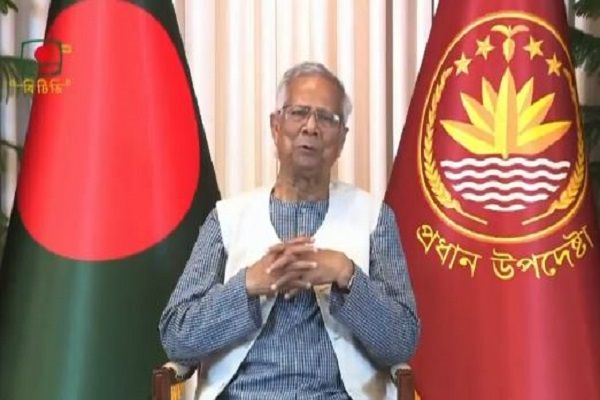
Dhaka, 17 February. Before the formation of the new government in Bangladesh under the leadership of BNP chief Tariq Rahman, interim Prime Minister Mohammad Yunus gave a farewell speech from his post. However, in his farewell address, Yunus spewed venom against India and once again mentioned the ‘Seven Sisters’ issue.
the north-eastern states of India Known as ‘Seven Sisters’
In his last speech before handing over power to Tariq Rahman, Yunus mentioned India’s north-eastern states, known as the ‘Seven Sisters’, which along with Nepal and Bhutan form part of a larger regional economic space along with Bangladesh. He proposed a sub-regional economic framework that would link Bangladesh’s sea lanes with Nepal, Bhutan and the ‘Seven Sisters’.
Yunus proposed sub-regional economic framework
Yunus said, ‘Our open sea is not just a geographical boundary, it is an open door for Bangladesh to connect with the world economy. There is a lot of economic potential in this area with Nepal, Bhutan and Seven Sisters.
His deliberate choice to refer to the Indian states as the ‘Seven Sisters’ without making any direct reference to India is being seen in strategic circles as a deliberate messaging aimed at reasserting the political and economic identity of the region.
Yunus’s talk suggested a regional economic framework centered on Bangladesh’s ports and maritime access, positioning Dhaka as a gateway not only to neighboring countries but also to India’s landlocked north-east region. Such framing is likely to catch New Delhi’s attention.
Over the past few years, India has invested heavily in connectivity and infrastructure projects through Bangladesh to more closely connect its North-East with the rest of the country. Yunus’ speech reversed the narrative that access and economic opportunities for the region may depend more on Bangladesh’s strategic decisions rather than Indian planning.
By grouping India’s north-eastern states, which form an important part of India, with sovereign countries, Yunus blurred traditional political boundaries. The move could be seen as an attempt to provoke New Delhi and influence the revival of India-Bangladesh relations under the newly elected government.
This farewell speech comes at a time when Yunus is facing criticism in the country over his interim administration’s handling of minority safety, democratic transition and foreign relations.