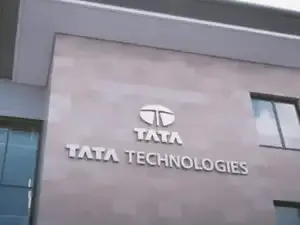
Tata Technologies
Mumbai: After nearly 18 months of paused investments amid US tariff uncertainty and EV incentive rollbacks, customers across automotive and industrial heavy machinery are starting to commit to new product cycles, said Warren Harris, MD & CEO, Tata Technologies, highlighting that his company is looking to capitalise on the trend.
“You can't not invest in a new product for too long," Harris told ET.
Encouraged by a full-vehicle development contract with a Japanese automaker, the Mumbai-listed engineering services firm has guided for a double-digit organic revenue growth this fiscal year. The deal, which Harris described as "very sizeable," spans two-and-a-half to three years. Ramp-up begins within four to six weeks, with material revenue impact expected in the second half of FY27, he said.
Also read | Toyota to build new 100,000-units-a-year car factory in Maharashtra
In industrial heavy machinery, new digital wins at a North American truck manufacturer and an expanding global engineering centre for a US customer are adding momentum, he said. The impending acquisition of Iveco by Tata Motors Commercial Vehicles could open additional opportunities, according to Harris.On margins, Ebitda declined to 16.1% i from 18.2% a year ago — a compression Harris attributed to a deliberate decision to protect capacity through the market slowdown rather than cut for short-term gain. A 200-basis-point improvement in Q4 signalled that the operating leverage is beginning to materialise. In Q4 FY26, net profit rose 8.1% to ?204 crore while revenue grew 22% to Rs 1,572.2 crore.
With $195 million on its balance sheet, Tata Technologies is actively scouting for acquisitions, targeting customer access in Europe and North America, and AI and technology capabilities globally.
Also read | India's Afcons emerges as successful bidder to construct railway line in Europe
Aerospace, meanwhile, continues to punch above its weight—compounding at 65–70% annually over five years to reach a Rs 334 crore annual run rate. Airbus, its flagship customer, is entering a new aircraft development super cycle from 2027, which Harris said will sustain strong double-digit growth in the vertical. At about 7% of total revenue currently, aerospace is the company's smallest vertical.
“You can't not invest in a new product for too long," Harris told ET.
Encouraged by a full-vehicle development contract with a Japanese automaker, the Mumbai-listed engineering services firm has guided for a double-digit organic revenue growth this fiscal year. The deal, which Harris described as "very sizeable," spans two-and-a-half to three years. Ramp-up begins within four to six weeks, with material revenue impact expected in the second half of FY27, he said.
Also read | Toyota to build new 100,000-units-a-year car factory in Maharashtra
In industrial heavy machinery, new digital wins at a North American truck manufacturer and an expanding global engineering centre for a US customer are adding momentum, he said. The impending acquisition of Iveco by Tata Motors Commercial Vehicles could open additional opportunities, according to Harris.On margins, Ebitda declined to 16.1% i from 18.2% a year ago — a compression Harris attributed to a deliberate decision to protect capacity through the market slowdown rather than cut for short-term gain. A 200-basis-point improvement in Q4 signalled that the operating leverage is beginning to materialise. In Q4 FY26, net profit rose 8.1% to ?204 crore while revenue grew 22% to Rs 1,572.2 crore.
With $195 million on its balance sheet, Tata Technologies is actively scouting for acquisitions, targeting customer access in Europe and North America, and AI and technology capabilities globally.
Also read | India's Afcons emerges as successful bidder to construct railway line in Europe
Aerospace, meanwhile, continues to punch above its weight—compounding at 65–70% annually over five years to reach a Rs 334 crore annual run rate. Airbus, its flagship customer, is entering a new aircraft development super cycle from 2027, which Harris said will sustain strong double-digit growth in the vertical. At about 7% of total revenue currently, aerospace is the company's smallest vertical.