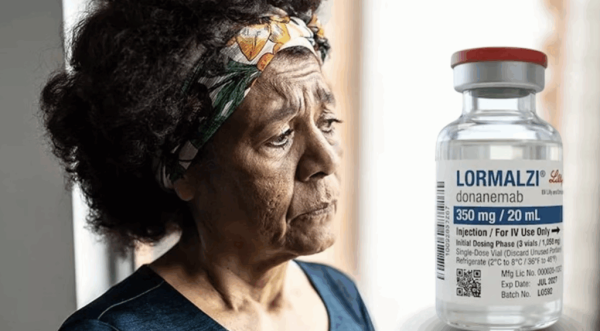
India has entered a new era in neurological treatment with the launch of its first amyloid-targeting Alzheimer’s drug, Lormalzi (donanemab), by Eli Lilly and Company. The breakthrough therapy has been approved for patients with early-stage Alzheimer’s disease and mild cognitive impairment.
But the excitement comes with a massive price tag.
A single 350 mg vial of Lormalzi will cost ₹91,688 in India, making it one of the most expensive neurological therapies available in the country today.
What Makes Lormalzi Different?
Unlike traditional Alzheimer’s medicines that mainly manage symptoms, donanemab is designed to target the disease process itself.
The therapy works by removing amyloid plaques — protein deposits in the brain strongly associated with Alzheimer’s progression. Donanemab
The drug:
- Is administered through monthly intravenous infusions
- Targets early symptomatic Alzheimer’s patients
- Aims to slow cognitive decline rather than reverse damage already done
Clinical trials showed up to 35% slowing of disease progression in some early-stage patients over 18 months.
Globally, the drug is sold under the brand name Kisunla and received US FDA approval in 2024.
India’s Dementia Burden Is Rising Rapidly
The launch comes at a time when India’s dementia crisis is growing fast.
According to reports:
- Around 8.8 million Indians currently live with dementia
- Cases may rise to nearly 16.9 million by 2036
- Alzheimer’s disease accounts for the majority of dementia cases
India’s ageing population is expected to dramatically increase neurological disorders over the next decade.
The economic burden is already enormous:
- Dementia reportedly costs India over ₹28,000 crore annually
- Long-term caregiving and healthcare expenses remain major challenges
The Biggest Problem: Affordability
Despite the medical breakthrough, experts say affordability may become the biggest obstacle.
At ₹91,688 per vial:
- Monthly therapy could cost lakhs annually
- Treatment often continues for over a year
- Additional MRI scans and neurological monitoring are required
That means total treatment costs could potentially exceed ₹15-20 lakh for some patients.
Eli Lilly says it will launch an “Alternate Access Programme” to improve affordability for eligible patients.
However, experts believe access will still remain limited largely to affluent urban patients and premium hospitals.
Scientists Are Still Debating Whether These Drugs Truly Work
Interestingly, the launch is also controversial.
A recent Cochrane review involving over 20,000 patients reportedly concluded that amyloid-targeting drugs like donanemab produced “absent or trivial” clinical benefits despite reducing plaque buildup.
Researchers also raised concerns about side effects including:
- Brain swelling (ARIA-E)
- Brain bleeding risks
- Need for frequent MRI monitoring
However, Eli Lilly strongly rejected the review’s conclusions, arguing that approved drugs should not be grouped with failed experimental molecules.
This debate is now becoming one of the biggest controversies in modern neurology:
Does removing amyloid plaques actually translate into meaningful real-world cognitive improvement?
Why This Launch Matters For India
Despite the debate, the launch is historically significant.
India now joins a small group of countries offering advanced disease-modifying Alzheimer’s therapies commercially.
The move could:
- Improve awareness around early dementia diagnosis
- Push investment into neurological healthcare
- Increase memory clinics and brain imaging infrastructure
- Accelerate India’s neuro-pharma ecosystem
But it also exposes a major healthcare reality:
India is entering an era where breakthrough medicines exist — but many remain financially inaccessible to most patients.
The bigger question now is not only whether Alzheimer’s can finally be slowed, but whether India’s healthcare system can make such cutting-edge therapies accessible beyond a tiny elite population.
Contact to : xlf550402@gmail.com
Copyright © boyuanhulian 2020 - 2023. All Right Reserved.