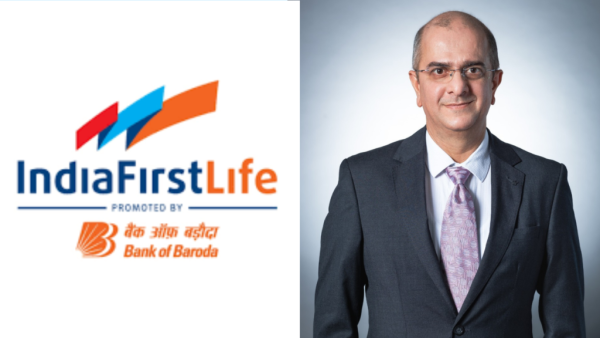
Despite the right intentions, life insurance is still one of the most avoided or neglected financial needs for many. This is clearly confirmed by the Insurance Density and Insurance Penetration statistics announced by government organizations every year. While India is moving fast towards its ambition of becoming a $5 trillion economy, one key foundation is still weak — the financial security of its citizens. Despite rapid economic progress, the country is still not sufficiently developed to have an effective social security system to protect individuals and families against life’s uncertainties. If India is to truly become an economic superpower, economic security is equally essential with growth. Life insurance can play an important role in this safety net — but for that, every Indian needs to recognize its importance at every stage of life. Kedar Patki, CFO of India First Insurance has given detailed guidance in this regard.
Even today there is a large lack of insurance coverage in India. More than 80 percent of households do not have life insurance coverage. According to IRDAI’s 2024-25 annual report, while the insurance industry registered a premium income of ₹8.86 lakh crore, which registered a growth of 6.73 per cent, the actual new insurance purchases declined to around 2.7 per cent. These figures show a huge gap in the actual purchase volume of protection and insurance. One of the major reasons for this is the general perception that “life insurance is necessary only after reaching a certain life stage”. In reality, however, life insurance offers different types of benefits at every age and every stage of life.
Insurance taken at a young age is more beneficial
Many young professionals in the early stages of their careers do not prefer life insurance. They feel that they do not have many responsibilities or dependents. But in reality, taking out life insurance at a young age offers an opportunity to get long-term protection at very low premiums. Health is generally better at younger ages, so risk is lower and premiums are cheaper. Early insurance can ensure lower premiums for life. Later, as responsibilities and life commitments increase, the cover can also be increased. Especially in urban life, living standards, accommodation, lifestyle and other expenses increase with age. Hence, it is wiser to secure life insurance at low rates early. This results in massive cost savings and consistent financial protection.
Steadily giving Tishi – financial protection for the family
Entering your thirties brings with it many responsibilities in life — marriage, home buying and parenthood change the spending pattern. At this point, life insurance can be not only protection, but also an effective tool for long-term financial planning. It also helps in future wealth creation along with financial security of the family. But the reality is that many families are under financial stress at this age. Given the rising cost of healthcare and increasing lifestyle risks, it becomes imperative to increase insurance coverage, cover critical illnesses and regularly review the insurance portfolio in line with changing life goals.
Forties loaded with responsibilities – more extensive protection
According to the 2025 survey by the Office for National Statistics, 25.6 per cent reported diseases such as heart disease, compared to 16.7 per cent between July 2017 and June 2018. The survey also revealed that lifestyle diseases are more prevalent in people above 45 years of age. So even though career is at its peak in 40s, health risks also increase. It is during this period that many financial responsibilities such as children’s education expenses, maintaining a certain lifestyle and responsibilities of aging parents reach their peak. At the same time, one has to pay attention to retirement planning. That is why the 40s is a phase of overhauling the entire economic planning and defense system. Diversification of life insurance investments is essential at this age. Annuity based pension plans and savings based money-back plans should be considered along with term plans, so that one can face all future uncertainties.
Strategic Fifty – Retirement and Succession Preparation
At this point we are approaching the end of active income life. Therefore, it is not affordable to limit the investment strategy to wealth accumulation only. A regular and predictable income is essential after retirement. Also, financial independence is essential to pursue dreams like pursuing a hobby or traveling abroad. Depending on the willingness and ability to actively manage retirement funds, immediate annuity plans can be chosen and the remaining funds can be invested in other financial instruments for growth. A combination of single and limited premium policies, for example guaranteed income plans, as well as term plans can be ideal for financial security.
Bitter truth
Conventional wisdom tells us to look for ways to protect family security, future goals, retirement life and legacy. But in reality we don’t think much beyond the “today and now” and don’t take the simple steps needed to protect what is dear to us. But as they say in English, it is never too late. There may be many options, but the important thing is to choose the right option and act on it. Life insurance is a dynamic financial instrument that changes with income, responsibilities and different stages of life. Investing in life insurance at the right time and at the right stage can achieve complete financial stability and security more effectively. After all, it is a long-term financial instrument in which the service provider has no option to withdraw.
Contact to : xlf550402@gmail.com
Copyright © boyuanhulian 2020 - 2023. All Right Reserved.