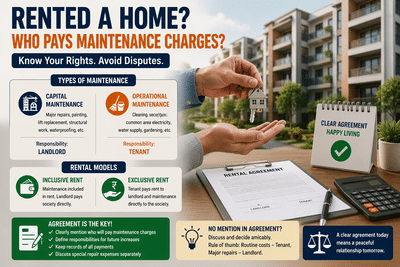
One of the most common sources of disagreement between landlords and tenants is the payment of society maintenance charges. In many residential apartments and gated communities, monthly maintenance fees are collected to cover common services and infrastructure. However, confusion often arises over whether these charges should be paid by the property owner or the tenant.
The answer usually depends on the rental agreement, the type of maintenance involved, and the understanding between both parties. Here's a detailed explanation of how maintenance charges are generally handled in rental properties.
Does the Law Clearly Define Who Should Pay?Rental arrangements in India are primarily governed by the Model Tenancy Act and relevant state rent laws. While these legal frameworks provide guidance on landlord-tenant relationships, they generally allow both parties to decide responsibility for maintenance charges through mutual agreement.
In practice, there is no single nationwide rule that automatically assigns every maintenance expense to either the landlord or the tenant. Instead, the terms mentioned in the rental agreement usually determine who bears the cost.
Understanding Two Types of Maintenance ChargesMaintenance expenses are generally divided into two broad categories.
1. Capital MaintenanceCapital maintenance includes major repairs and improvements that increase or preserve the long-term value of the property. Examples include:
- Structural repairs.
- Exterior or interior repainting of the building.
- Lift replacement or major repairs.
- Waterproofing work.
- Major renovation projects.
Since these expenses improve the property itself, they are generally considered the responsibility of the property owner.
2. Operational MaintenanceOperational maintenance covers day-to-day services required for the regular functioning of the residential society. These may include:
- Security guard salaries.
- Housekeeping and cleaning services.
- Maintenance of common areas.
- Electricity for common facilities.
- Water supply management.
- Gardening and routine upkeep.
Because tenants directly benefit from these ongoing services during their stay, these expenses are often paid by the tenant, provided the rental agreement specifies this arrangement.
Why the Rental Agreement Is So ImportantThe rental agreement is the most important document when deciding responsibility for maintenance charges.
Before moving into a rented property, both the landlord and tenant should clearly mention:
- Who will pay monthly society maintenance.
- Whether maintenance is included in the rent.
- How additional charges will be handled.
- Responsibility for special repair expenses.
A well-drafted agreement helps prevent misunderstandings and reduces the likelihood of future disputes.
Inclusive Rent vs Exclusive RentMany rental agreements follow one of two common payment models.
Inclusive RentIn this arrangement, the landlord includes society maintenance charges in the monthly rent.
For example:
- Monthly rent: ₹15,000
- Society maintenance: ₹2,000
- Total payable by tenant: ₹17,000
The landlord then pays the maintenance charges directly to the housing society.
Exclusive RentUnder this model, the tenant pays only the agreed monthly rent to the landlord and separately pays society maintenance charges directly to the housing society.
The payment method should always be clearly stated in the rental agreement.
What If the Agreement Doesn't Mention Maintenance?Problems often arise when the rental agreement does not specify who is responsible for maintenance charges.
If a landlord later asks the tenant to pay maintenance that was never discussed, both parties should first attempt to resolve the issue through mutual discussion.
In general, housing experts suggest:
- Routine operational maintenance is usually borne by the tenant if they are using the services.
- Major repair costs, structural improvements, or one-time special funds are typically the responsibility of the landlord.
However, the final responsibility may depend on the specific terms agreed upon between both parties.
Tips for Landlords and TenantsTo avoid future disputes:
- Read the rental agreement carefully before signing.
- Clearly define maintenance responsibilities.
- Keep payment records for all maintenance charges.
- Clarify whether future increases in maintenance fees will be shared.
- Discuss special repair expenses separately before they arise.
Society maintenance charges can become a point of conflict if responsibilities are not clearly defined at the beginning of a tenancy. While routine operational expenses are often paid by tenants and major capital repairs are generally handled by landlords, the rental agreement remains the most important document for determining liability. Clearly specifying maintenance terms before signing the lease can help both landlords and tenants avoid unnecessary disagreements later.
Contact to : xlf550402@gmail.com
Copyright © boyuanhulian 2020 - 2023. All Right Reserved.