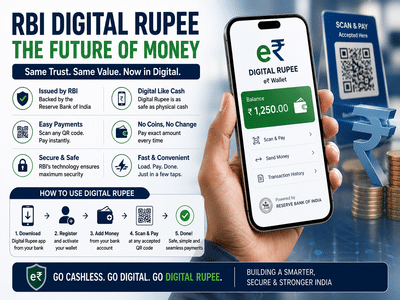
The Digital Rupee (e₹) is gradually becoming an important part of India's digital payment ecosystem. Issued by the Reserve Bank of India (RBI), the Digital Rupee is the country's official Central Bank Digital Currency (CBDC) and is designed to offer the convenience of digital payments while retaining the reliability of physical cash.
As awareness about the Digital Rupee grows, many people are receiving messages from participating banks and are curious about what the service offers and how it differs from existing payment methods like UPI. Here's everything you need to know.
What Is the Digital Rupee?The Digital Rupee is the electronic version of India's physical currency, issued directly by the Reserve Bank of India.
Unlike cryptocurrencies or privately issued digital tokens, the Digital Rupee is backed by the RBI and carries the same value as paper currency. Every digital rupee represents legal tender and can be used for eligible transactions just like cash.
It combines the security of central bank-issued money with the convenience of digital technology.
How Does the Digital Rupee Work?The Digital Rupee is stored in a secure digital wallet provided by participating banks.
Once users load money into their Digital Rupee wallet, they can make payments digitally without carrying physical cash. The process is simple and familiar for anyone who already uses digital payment applications.
In many cases, payments can be completed by scanning supported QR codes, making the experience similar to QR-based digital transactions.
Major Benefits of the Digital RupeeThe RBI's Digital Rupee offers several advantages:
- Official digital currency issued by the Reserve Bank of India.
- Functions as a digital version of physical cash.
- Supports fast and convenient digital payments.
- Eliminates the need to carry large amounts of cash.
- Helps users make exact-value payments without worrying about change.
- Can be used through participating banks' Digital Rupee wallets.
- Backed by the security and trust of India's central bank.
These features make the Digital Rupee an additional payment option alongside existing digital payment methods.
How to Start Using the Digital RupeeGetting started with the Digital Rupee is straightforward.
Follow these general steps:
The exact registration process may vary depending on the participating bank.
Is the Digital Rupee Safe?Yes. The Digital Rupee is issued directly by the Reserve Bank of India, making it an official form of Indian currency.
Since it is a central bank digital currency, it is not subject to the same risks associated with privately issued digital assets or cryptocurrencies. Users receive the confidence of dealing with an RBI-backed payment instrument.
However, users should continue following standard cybersecurity practices, such as protecting their mobile devices and avoiding fraudulent links or unofficial applications.
Growing Adoption Across IndiaThe Digital Rupee has witnessed increasing adoption as more banks join the RBI's CBDC initiative.
The growing number of users reflects India's continued focus on expanding secure digital payment options and reducing dependence on physical cash. As additional financial institutions integrate the service, the availability and acceptance of the Digital Rupee are expected to expand further.
Digital Rupee vs UPIAlthough the payment experience may appear similar, the two systems are different.
- UPI transfers money directly between bank accounts.
- Digital Rupee allows users to spend RBI-issued digital currency stored in a digital wallet.
Both systems can support QR-code-based payments, but the underlying payment mechanism differs.
Final TakeThe RBI's Digital Rupee represents an important milestone in India's digital finance journey. By offering an RBI-backed digital version of cash, the system combines the convenience of electronic payments with the trust associated with sovereign currency. As more banks and merchants adopt the platform, the Digital Rupee is expected to become another convenient option for everyday transactions, helping users make secure, cashless payments with ease.
Contact to : xlf550402@gmail.com
Copyright © boyuanhulian 2020 - 2023. All Right Reserved.