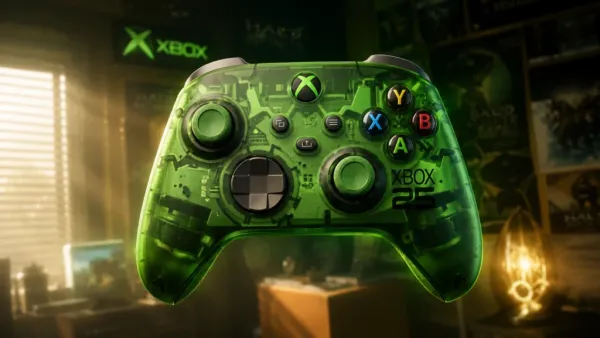
Microsoft’s next-generation Xbox could become a single platform for games spanning multiple generations, according to leaked documents obtained by The Verge. The reported plans include support for original Xbox, Xbox 360, Xbox One, and Xbox Series games on Project Helix, alongside PC titles. Microsoft is also reportedly working on a system that would allow some physical Xbox games to be converted into digital licenses.
Project Helix Could Bring Five Xbox Generations Together
The leaked memo reportedly outlines an ambitious backward-compatibility strategy for Project Helix. According to the documents, the upcoming console could run games from the original Xbox released in 2001, Xbox 360 from 2005, Xbox One from 2013, and Xbox Series consoles from 2020, in addition to games developed specifically for Helix.
PC games are also expected to be part of the platform. The leaked information indicates that Xbox 360 titles are being brought to PC and would also run on Project Helix and Xbox-branded PCs. If implemented as described, the approach would give the next Xbox access to a much broader library than previous Xbox consoles. Rather than treating each generation as a separate ecosystem, Microsoft appears to be working toward a platform where older games can continue to follow players across newer hardware.
Xbox 360 Games Could Expand to PC
The leak also adds an important piece to Microsoft’s existing backward-compatibility plans. Microsoft had already begun bringing a limited selection of original Xbox games to PC, but the leaked documents reportedly show that Xbox 360 games are also being prepared for PC.
The GameGPU report similarly says Microsoft has developed emulators for games from the original Xbox, Xbox 360, Xbox One and Xbox Series generations. The reported plan would extend compatibility beyond consoles and bring more of the Xbox catalogue to PC-based devices.
The move could also benefit Xbox handhelds and other Xbox-branded PCs, creating a wider ecosystem in which players can access older Xbox games beyond traditional consoles. The Verge reports that Xbox 360 games are expected to work on Project Helix and Xbox PCs as part of this broader compatibility effort.
Disc-to-Digital Could Change How Physical Games Work
Another major part of the leaked plans is Microsoft’s reported Disc-to-Digital programme. The initiative is designed to help owners of physical Xbox One and Xbox Series games move those purchases into a digital library. Under the reported system, an eligible physical disc could be converted into a digital licence associated with the player’s account and the specific disc. The digital ownership could then follow the player across compatible Xbox devices.
However, this does not necessarily mean that every physical game will automatically become digitally available. The leaked documents reportedly make publisher participation a requirement. Microsoft is presenting the program to publishers as a way to turn physical owners into digital customers while allowing publishers to retain control over their games. The timing of the program is also tied to the leaked roadmap. The X post and GameGPU report point to an August 2026 start for the physical-disc conversion initiative, although the broader rollout details remain unconfirmed.
Publishers Will Decide Which Games Are Included
The biggest limitation to Microsoft’s plan is that backward compatibility will not necessarily cover every Xbox game ever released. According to the leaked memo, publishers must opt in to the preservation programmes. For original Xbox and Xbox 360 titles, publishers would reportedly decide whether individual games become available, how much they cost and whether they are offered through Xbox Game Pass or sold separately.
Microsoft says publishers would not need to carry out additional engineering work to make the Disc-to-Digital system function. However, permission is still required, meaning licensing and rights issues could determine how large the final catalogue becomes.
That could prove difficult for older games whose licences have expired. The Verge points to the Forza Horizon series as an example of games that have been removed from digital stores because rights to licensed cars and music eventually expired. This means even games owned by Microsoft may not necessarily remain available indefinitely.
Project Helix May Not Require a Disc Drive
There is another unresolved question surrounding the next Xbox: whether Project Helix itself will include a physical disc drive. The Verge reports that Microsoft has not yet made a final decision on the matter. That makes the Disc-to-Digital initiative particularly significant if Helix ultimately ships without a drive, as players could potentially carry eligible physical-game ownership into a digital library instead of being forced to repurchase those titles.
However, the leaked plans should not be interpreted as confirmation that Helix will be a digital-only console. Microsoft has yet to publicly confirm the final hardware design.
A Unified Xbox Library Could Be Microsoft’s Bigger Goal
Taken together, the leaked plans suggest Microsoft is working toward a unified Xbox library spanning consoles, PCs and potentially handheld devices. Digital licences could follow players across compatible Xbox devices, while older games could return through emulation and publisher-approved releases. The approach could also give older titles a new commercial life, while allowing publishers to retain control over pricing and distribution.
Conclusion
The leaked Project Helix documents suggest Microsoft is planning an expansive backward-compatibility system covering games from multiple Xbox generations and PC. However, the plans remain unconfirmed, with publisher approval still crucial to how much of the library becomes available. The Disc-to-Digital programme could further support Microsoft’s move toward a unified Xbox ecosystem, particularly if future hardware becomes more digitally focused.
Contact to : xlf550402@gmail.com
Copyright © boyuanhulian 2020 - 2023. All Right Reserved.