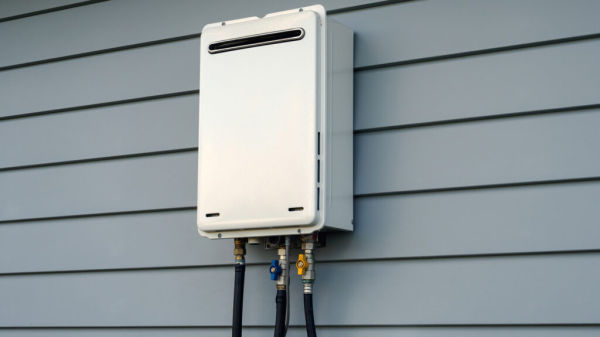
If you’re thinking of installing a tankless water heater, you should learn about its disadvantages before making a final decision. You should also consider where the water heater will be installed, as there are some caveats to placing one outside instead of inside your home. For starters, yes, you can put some tankless water heaters outdoors, but this may not be the case for every model on the market.
Tankless water heaters can be designed with built-in cold-weather features. Unlike a standard outdoor system, this setup allows the unit to withstand freezing temperatures. Without those controls in place, the water pipes that run to the system could potentially be affected. The U.S. Department of Energy says that a standard tankless system should only be used outdoors in warmer climates, typically across the southernmost part of the country, including Florida, Texas, and across the Gulf Coast.
But why would you want to install a tankless water heater outdoors in the first place? The fact is that some homeowners may not have enough indoor room, or the space to run the necessary vent piping, to accommodate one of these systems. But by placing the system outdoors, you don’t have to worry about having enough space. These systems are also self-venting, which solves the other problem, and they can be a bit easier to both access and service as well.
Winter tips for a tankless water heater
Emagnetic/Shutterstock
If you’re installing a tankless water heater outdoors in colder temperatures, be sure it has freeze protection built in so that it can endure the winter. For example, some of Rheem’s tankless gas systems utilize ceramic heaters to keep the pipes from freezing. These heaters typically kick in when outside temperatures begin to fall, and they can provide protection for up to -30 degrees Fahrenheit.
Some outdoor systems may also require preventative measures when a winter storm is on the way. That includes draining the water from the system if you believe the power will shut off. You might also need to wrap the pipes with an insulated covering or protect them with a heating cable, or both. But beware that not all tankless water heater systems are built the same, which means these tips may not apply to you. The best way to learn how to protect your specific model is to consult your owner’s manual.
It’s also a good idea to have your tankless water heater inspected every year. That way, you’re prepared for the winter, and if there is any prep that needs to be done, the technician can address it then. That will also give you the chance to ask questions about your system and what you should do when the temperatures begin to drop. A yearly service call should also include draining, cleaning, and ensuring that the entire system is in good working order.